



About project
“Carbon dioxide (CO₂) emitted into the atmosphere has been accumulating in the oceans for over two centuries. This process occurs particularly rapidly in the cold waters of the Arctic Ocean, where CO₂ uptake can be three to four times faster than in other oceanic regions. This phenomenon, especially in the inner parts of fjords, can lead to a decrease in calcium carbonate saturation (Ω), more specifically a reduction in carbonate ion (CO₃²⁻) concentrations, which are essential for many marine organisms that build calcium carbonate structures.”
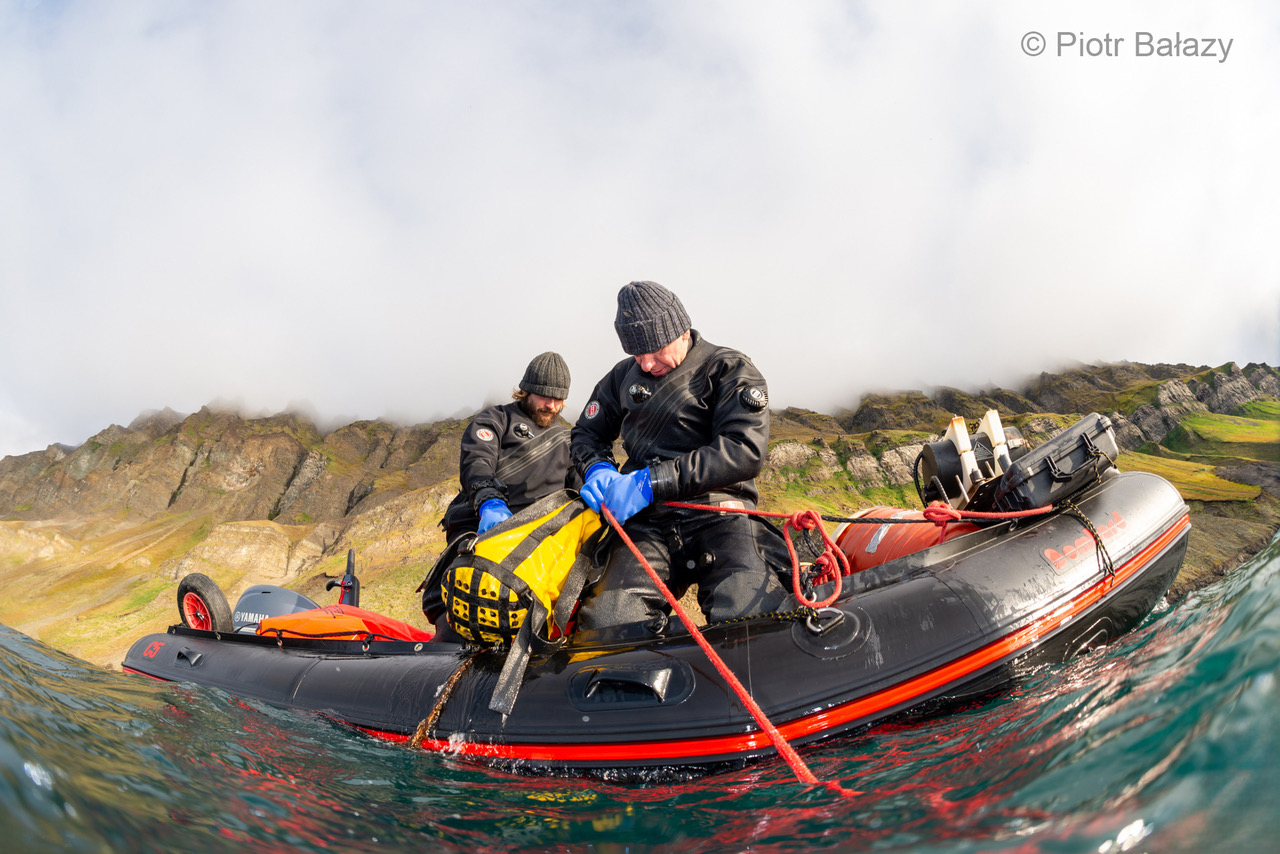
In the Svalbard region, melting glaciers, the inflow of warmer Atlantic waters, and the retreat of sea ice drive dynamic changes in the marine environment, both physically and chemically. In these changing conditions, calcifying organisms such as bryozoans, Serpulidae polychaetes, and barnacles play a particularly important role. By forming calcium carbonate skeletons, they extract calcium and magnesium ions from the water and convert them into calcium carbonate (CaCO₃). The built shells, skeletons, and exoskeletons not only provide protection but also contribute to long-term carbon storage in the ocean, representing an important component of the global carbon cycle.
Moreover, calcareous skeletons act as natural environmental archives. During biomineralization, calcifying organisms incorporate essential elements from the water (e.g., Ca, Mg, Na, Sr, Mn, Ba, Cu, Pb, Y, V, Cd), thereby recording in their carbonate structures, the environmental conditions present at the time. Analysis of skeleton geochemistry allows researchers not only to study current organismal responses to environmental change but also to reconstruct historical environmental conditions, including within Arctic fjords.
The aim of this project is to gain a detailed understanding of how the chemical composition and structure of calcifying organism skeletons change in response to environmental parameters such as Temperature, Salinity, pH, calcium carbonate saturation (Ω), and metal concentrations in seawater from Svalbard fjords. The study is based on material collected between 2009 and 2024, as well as new samples collected from 2025 to 2027 from contrasting depths, parts of the fjord, allowing investigation of both temporal and spatial variability and enabling projections of the impact of ongoing climate change on calcifying organisms in the future.
To analyze mineralogical and geochemical composition, we use a range of techniques including X-ray diffraction (XRD), inductively coupled plasma triple quadrupole mass spectrometry (ICP-MS), micro-computed tomography (micro-CT), and scanning electron microscopy (SEM). These methods allow detailed examination of skeleton composition and structure across scales from macro- to nanometer, and precise correlation of organismal changes with local environmental conditions.